

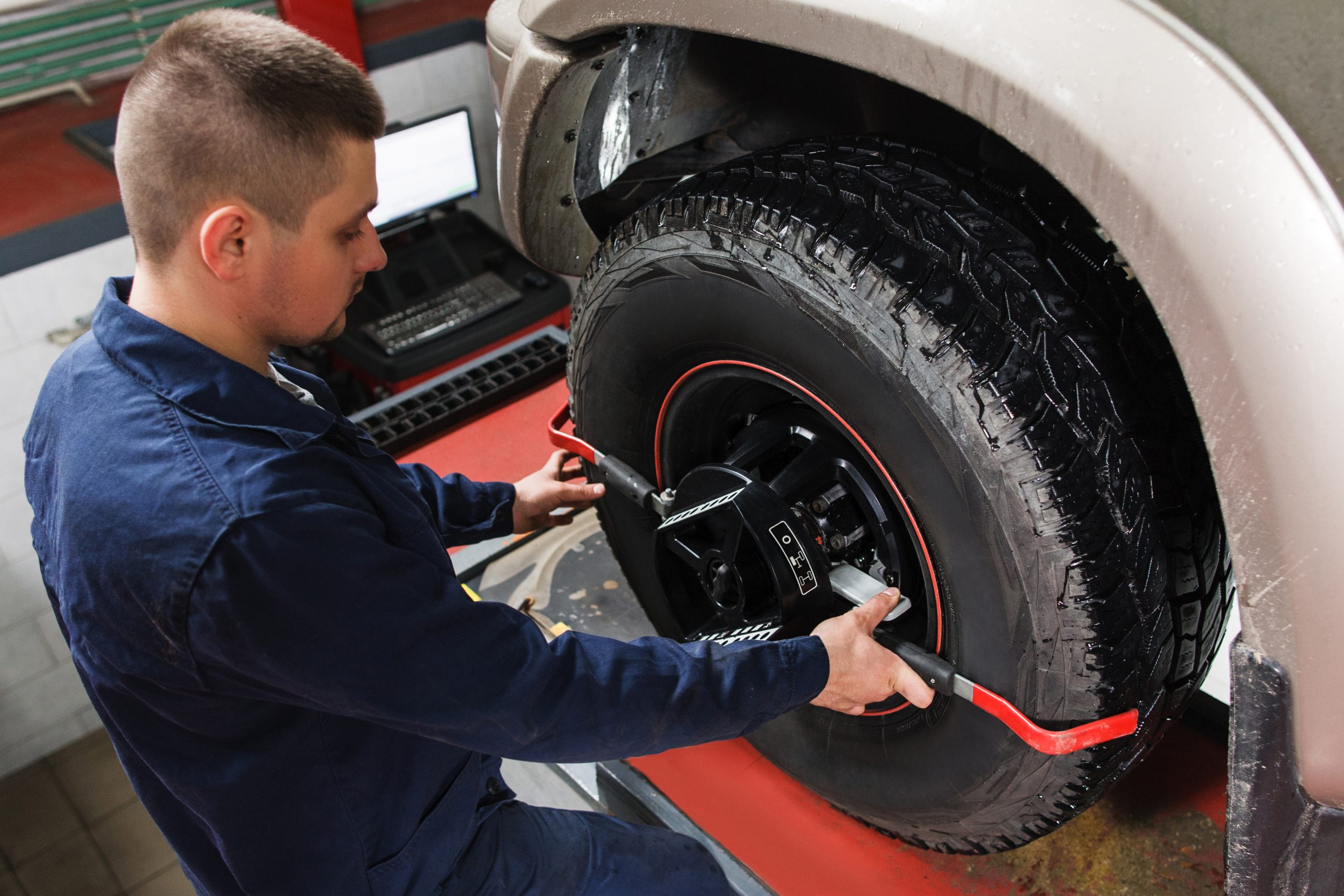
Tire alignment rarely gets the attention it deserves, yet it plays a defining role in how your Ford drives, wears, and ages. When alignment is correct, the vehicle tracks cleanly, the steering feels settled, and the tires do their work evenly and efficiently. When it’s off, even slightly, the effects show up everywhere—often long before a warning light ever appears.
Keeping alignment in check is one of the simplest ways to protect both ride quality and long-term running costs.
Why Tire Alignment Matters More Than Most Drivers Think
Proper alignment keeps all four tires working together as a system. When angles drift out of specification, tires scrub instead of roll, generating excess heat and accelerating wear. Fuel efficiency suffers, steering precision dulls, and suspension components absorb stress they were never designed to carry for long.
Ford engineers tune alignment settings carefully to balance comfort, control, and stability. Preserving those settings keeps the vehicle driving as intended—confident at speed, predictable through corners, and relaxed on longer trips. It’s one of those services you don’t notice when it’s right, but feel immediately when it’s wrong.
How Often Alignment Should Be Checked
For most Ford vehicles, an alignment inspection every 6,000 to 10,000 miles—or about once per year—is a sensible baseline. That interval aligns well with routine maintenance visits and allows technicians to catch small deviations before they turn into uneven tire wear or steering complaints.
Road conditions can shorten that window. Impacts from potholes, rough rural roads, or even repeated curb contact can nudge alignment out of spec without leaving obvious damage behind. In regions like Dahlonega, where roads can vary widely in surface and elevation, regular checks are a smart preventative habit rather than a reaction to a problem.
Signs Alignment Is Already Off
Alignment issues tend to announce themselves gradually. Uneven tire wear is often the first visible clue, especially wear concentrated on the inner or outer edges. A vehicle that drifts left or right on a straight road, or a steering wheel that no longer sits centered, also points to alignment drift. Some drivers notice mild vibration or a sense that the car never quite settles on the highway.
Addressing these signs early prevents accelerated tire wear and avoids unnecessary strain on suspension components. Left uncorrected, small alignment issues have a way of becoming expensive ones.
The Payoff of Staying Ahead of Alignment Maintenance
Regular alignment maintenance extends tire life, improves fuel efficiency, and keeps steering response crisp and predictable. It also reduces long-term stress on suspension and steering components, helping the vehicle age gracefully rather than prematurely.
Most importantly, it preserves the driving confidence Ford vehicles are designed to deliver. The car feels composed, the steering remains honest, and the tires wear as evenly as they should.
Professional Alignment Service in Dahlonega, GA
Accurate alignment depends on precise equipment and technicians who understand Ford specifications in detail. At Chestatee Ford, factory-trained technicians use modern alignment systems to restore geometry exactly as intended, not just “close enough.”
If your Ford hasn’t had an alignment check recently—or if the steering no longer feels quite right—now is the right time to address it. Schedule a visit online today and keep your vehicle tracking straight, wearing evenly, and driving the way it was meant to.
Connect with us

Recent Blog Entries
- 2026 Ford Bronco vs. 2026 Bronco Sport: Which One Fits You?
- Ford Mobile Service: Convenient Care at Your Door in Dahlonega, GA
- 2026 Ford Ranger: A Midsize Pickup Big on Power and Efficiency in Dahlonega, GA
- Ford Co-Pilot360 Features: Helpful Safety Tech Explained
- Smarter Towing Starts with the 2026 Ford Super Duty®