

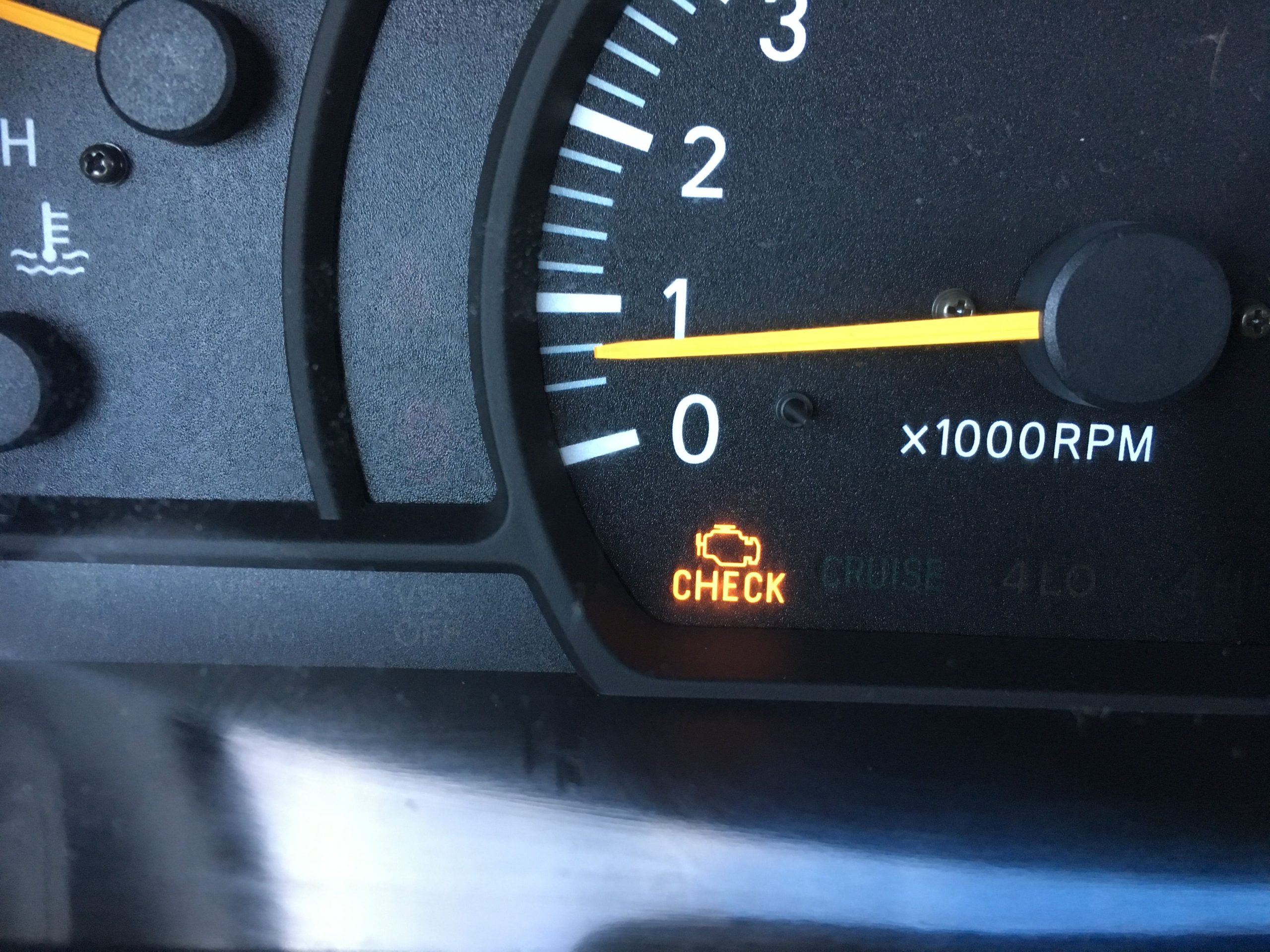
The Ford check engine light can be confusing, as it doesn’t identify a specific problem like other warning lights. This can cause some drivers to ignore it if their vehicle seems to be ok. As your Ford dealership, we want to tell you how it works and why it’s important.
From Your Ford Dealership: Understanding the Ford Check Engine Light
Computers and Sensors
Since the 1980s, vehicles have become increasingly computerized. The computer controls and regulates your engine and other systems, reducing the driver’s workload and allowing you to concentrate on the road ahead. The Electronic Engine Control (EEC) is the computer in your Ford, and it has a vast network of sensors, each of which is connected to an important system or component.
The sensors receive instructions from the computer, like increasing or decreasing the amount of air in the engine for perfect combustion. They also send essential information to the computer so it can make decisions, like the present fuel-to-air ratio in the fuel-air mixture. Each sensor monitors its connected component and instantly informs the computer if something goes wrong.
If Something Is Wrong
Sensors are very sensitive and can detect the slightest change in the health or performance of the system they’re connected to. If a sensor detects an issue, it signals the EEC. The EEC will diagnose the issue and attempt to correct it. If the EEC can’t correct it, the corresponding warning light will illuminate to warn you of the problem so it can be repaired.
What the Check Engine Light Identifies
Most warning lights focus on a single system, for example, the Tire Pressure Monitoring System (TPMS). The engine light has the broadest scope of all warning lights, as the EEC activates it in response to any issue that affects engine performance.
This warning light is also triggered if there’s a problem with the transmission. This is because the two systems work so closely together that any issue affecting the transmission will affect engine performance.
How We Identify the Problem
As we saw above, the EEC tries to fix any issue. If it can’t resolve the situation, it saves the problem with an error code before it illuminates the warning light. Our technicians connect an OBD II scanner to your Ford’s EEC. This machine allows us to access the error codes it’s stored. We then compare this code to the list of potential error codes to identify the problem so we can repair it.
If your engine light illuminates, contact us ASAP at Chestatee Ford in Dahlonega, GA.
Connect with us

Recent Blog Entries
- 2026 Ford Bronco vs. 2026 Bronco Sport: Which One Fits You?
- Ford Mobile Service: Convenient Care at Your Door in Dahlonega, GA
- 2026 Ford Ranger: A Midsize Pickup Big on Power and Efficiency in Dahlonega, GA
- Ford Co-Pilot360 Features: Helpful Safety Tech Explained
- Smarter Towing Starts with the 2026 Ford Super Duty®